
Quad-Gate Logic: A Deep Dive into the NXP 74HCT32D OR Gate IC for Modern Digital Circuit Design
In the realm of digital electronics, the fundamental building blocks that orchestrate logic and decision-making are logic gates. Among these, the OR gate stands as a pivotal component, outputting a high signal whenever at least one of its inputs is high. While simple in function, its implementation in robust, reliable, and efficient integrated circuits (ICs) is critical for modern design. The NXP 74HCT32D is a quintessential example of such an implementation, a quad 2-input OR gate IC that continues to be a cornerstone in both prototyping and production circuits.
This IC belongs to the widely adopted 74HCT family, a series renowned for its compatibility with both TTL and CMOS logic levels. The 'HCT' designation signifies High-speed CMOS with TTL-compatible inputs. This is a crucial feature, as it allows the 74HCT32D to seamlessly interface with older TTL-based systems (which operate at higher voltage thresholds for a 'low' signal) while benefiting from the low power consumption and high noise immunity inherent to CMOS technology. This bridging capability makes it an invaluable tool for system upgrades and mixed-signal environments.
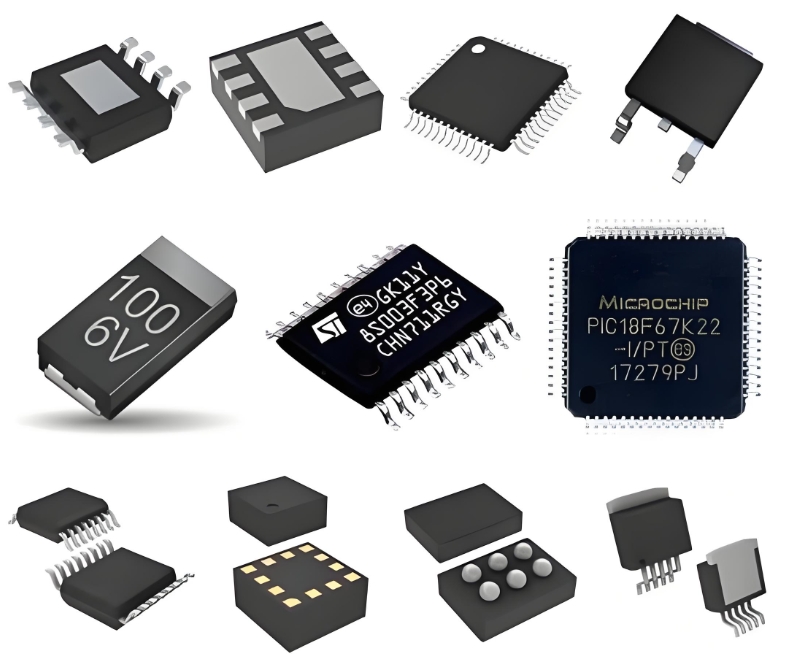
Housed in a common 14-pin SOIC (Small Outline Integrated Circuit) package, the 74HCT32D integrates four independent OR gates into a single, compact chip. Each gate requires two inputs and provides one output. This high level of integration allows designers to minimize board space, reduce component count, and simplify circuit layout. The pinout is standardized, making it a drop-in replacement for many other 74-series OR gate ICs, thus enhancing design flexibility and ease of use.
The electrical characteristics of the 74HCT32D are tailored for performance and reliability. It operates from a wide power supply range of 4.5V to 5.5V, making it perfectly suited for standard 5V digital systems. Despite its CMOS core, its inputs are designed to recognize TTL logic levels, accepting voltages as high as 2V as a definite 'high' input. Its outputs provide strong drive capability, capable of sourcing or sinking up to 4mA, which is sufficient to drive several inputs of other logic gates or even small LEDs directly.
A key advantage of the HCT family is its low power consumption, especially when compared to pure TTL equivalents. Power dissipation is significantly reduced, particularly in static states, which is essential for battery-powered and energy-sensitive applications. Furthermore, it offers superior noise margin, ensuring stable operation even in electrically noisy environments, a common challenge in complex digital systems and motor-driven applications.
In practical application, the 74HCT32D finds its place in numerous functions. It is essential in creating logical OR operations for data processing paths, used as part of larger combinational logic circuits (like adders or multiplexers), and employed in glue logic to interconnect different digital subsystems within a microcontroller or microprocessor-based board.
ICGOODFIND: The NXP 74HCT32D is far more than a simple collection of OR gates. It represents an optimal fusion of performance, compatibility, and integration. Its TTL-CMOS compatibility, low power consumption, high noise immunity, and compact quad-gate design solidify its status as an indispensable and reliable component for engineers and hobbyists engaged in modern digital circuit design.
Keywords: TTL-CMOS Compatibility, Quad 2-Input OR Gate, Low Power Consumption, Noise Immunity, 74HCT Logic Family.

