
Microchip PIC24FJ256DA210T-I/PT: A Comprehensive Technical Overview
The Microchip PIC24FJ256DA210T-I/PT represents a high-performance, feature-rich 16-bit microcontroller within Microchip's extensive PIC24F family. Engineered for demanding embedded applications, this device combines substantial computational power with a diverse set of integrated peripherals, making it a versatile solution for complex designs in industrial control, automotive, medical, and consumer electronics.
Core Architecture and Performance
At its heart lies a modified Harvard architecture 16-bit CPU core, capable of operating at speeds up to 16 MIPS. This performance is driven by a 32 MHz internal oscillator, which can be leveraged directly or used to phase-lock loops (PLLs) for higher system clock speeds. The core's design includes a 24-bit instruction word and a linear addressing space for up to 4 Megawords of program memory, facilitating efficient C compiler optimization and handling of large code bases.
Memory Configuration
A standout feature of this microcontroller is its generous memory allocation. It is equipped with 256 KB of on-chip Flash program memory, providing ample space for sophisticated application code. Complementing this is 16 KB of SRAM data memory, which is crucial for data-intensive tasks and complex algorithm execution. This robust memory configuration ensures the MCU can manage substantial variables, buffers, and real-time data processing without external memory components.
Integrated Peripherals and Connectivity
The PIC24FJ256DA210T-I/PT is distinguished by its highly integrated peripheral set, designed to minimize external components and reduce total system cost and board space.
Graphics Support: A key feature is its integrated Graphics Controller. This peripheral can directly drive a TFT LCD display, offloading the CPU from the intensive task of managing the display refresh, making it ideal for human-machine interface (HMI) applications.
Connectivity: It includes multiple serial communication interfaces, such as UART, SPI, and I²C™ modules, facilitating easy connection to sensors, memory, and other peripherals. It also features a CAN 2.0b module for robust automotive and industrial network communications.
Analog Capabilities: The MCU incorporates a high-speed 10-bit Analog-to-Digital Converter (ADC) with multiple channels, allowing for precise measurement of analog signals from various sensors.
Timing and Control: It is equipped with numerous timers/counters, including a 16-bit timer with PWM output capabilities for motor control and power conversion applications.
Packaging and Design Considerations
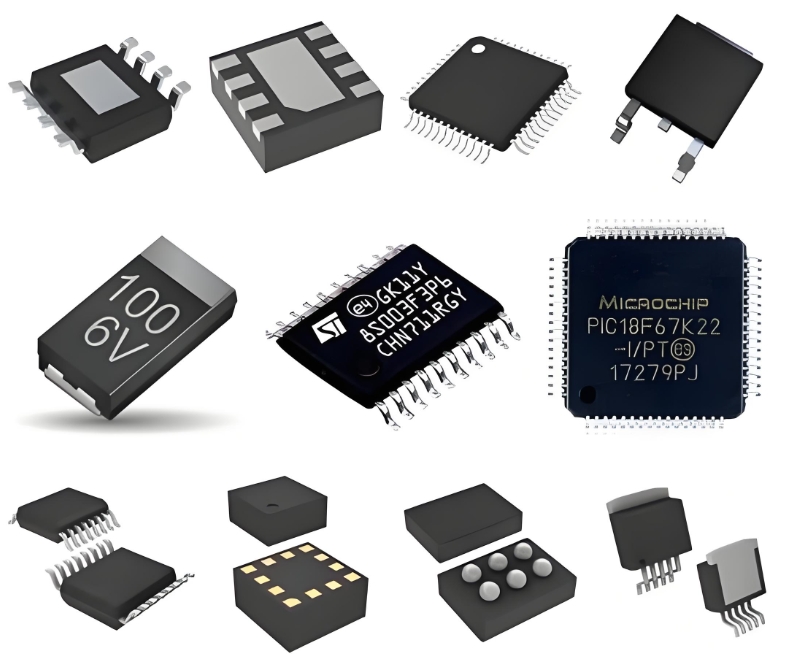
Housed in a 100-pin TQFP package, the device offers a high number of I/O pins, providing extensive connectivity options for complex systems. Its design emphasizes low-power operation, featuring multiple power-saving modes (Sleep, Idle, Doze) to extend battery life in portable applications. The -I suffix in the part number denotes an industrial temperature range of -40°C to +85°C, ensuring reliable operation in harsh environments.
Development Ecosystem
Development is supported by Microchip's mature and comprehensive ecosystem, including the MPLAB® X Integrated Development Environment (IDE) and the PICkit™ 4 or MPLAB ICD 5 debuggers/programmers. A vast array of software libraries, application notes, and a global community further accelerate design cycles.
In summary, the Microchip PIC24FJ256DA210T-I/PT is a powerful and highly integrated 16-bit microcontroller. Its combination of substantial memory, a dedicated graphics controller, and a rich suite of communication and analog peripherals makes it an exceptional choice for developers creating next-generation embedded systems with complex user interfaces and connectivity requirements.
Keywords: 16-bit Microcontroller, Integrated Graphics Controller, 256KB Flash, CAN Module, TQFP Package.

